Artificial Intelligence Applications in Crafting Tailored Gaming Experiences for Mobile Users
Player Data Analysis and Behavioral Modeling
Artificial intelligence systems process vast amounts of player interaction data in mobile games, including session duration, in-app purchase patterns, and level completion rates, to construct detailed behavioral models that update continuously during gameplay. Developers deploy machine learning algorithms to identify clusters of similar players based on these metrics, which allows games to adjust content delivery without manual intervention from design teams. Research from academic institutions such as those affiliated with the International Journal of Computer Games Technology shows how these models segment users into categories like casual explorers versus competitive achievers, leading to distinct experience pathways within the same title.
Game studios integrate neural networks that track micro-interactions such as swipe speed and hesitation points during tutorials, then refine future prompts accordingly. This approach has expanded since 2024 as mobile hardware capabilities improved, enabling on-device processing that reduces latency compared to cloud-dependent systems. Observers note that by May 2026 several major platforms reported measurable gains in average playtime after implementing these refined profiling techniques across their portfolios.
Adaptive Difficulty and Progression Systems
AI frameworks adjust game difficulty in real time by evaluating performance trends rather than relying on static difficulty tiers selected at launch. Reinforcement learning agents test multiple challenge configurations against historical data from thousands of sessions, selecting the variant that maintains engagement without causing abrupt drop-offs. Titles in the action and puzzle genres commonly employ these methods to scale enemy behaviors or puzzle complexity based on individual skill trajectories observed over multiple days of play.
Procedural generation tools powered by generative adversarial networks create level layouts that incorporate elements proven effective for specific player archetypes, such as wider pathways for users who prefer exploration over precision timing. Data from industry reports indicates these systems maintain consistent retention curves across diverse geographic markets, including those monitored by Canadian regulatory bodies overseeing digital entertainment standards. The process connects player feedback loops directly to content creation pipelines, minimizing the need for extensive post-launch patches.
Personalized Content Delivery and Monetization
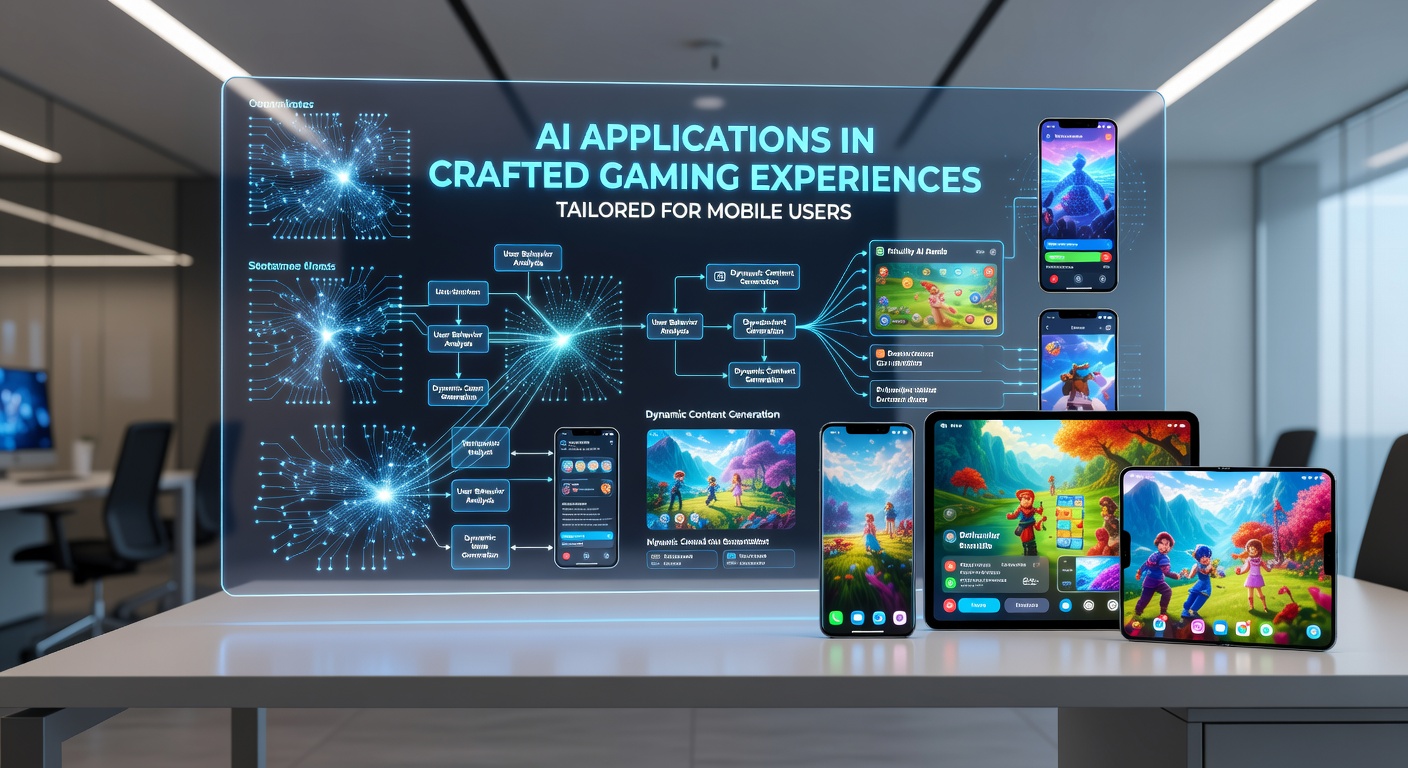
Recommendation engines within mobile games evaluate past interactions to surface relevant cosmetics, characters, or narrative branches at moments when users demonstrate higher receptivity. These engines draw from collaborative filtering techniques combined with contextual signals like time of day and device type to prioritize suggestions that align with demonstrated preferences. Studios track conversion rates from these targeted presentations, refining the underlying models weekly based on aggregated anonymized outcomes.
Dynamic event scheduling uses predictive analytics to time limited-time offers or story expansions according to predicted return windows derived from individual play histories. European research consortia studying digital media consumption patterns have documented how such timing optimizations correlate with increased session frequency across age demographics. Integration with broader platform ecosystems, such as app store algorithms, further amplifies reach while maintaining consistency with each game's internal progression logic.
Implementation Challenges and Technical Considerations
Privacy regulations in multiple jurisdictions require explicit consent mechanisms and data minimization practices when collecting behavioral signals for AI training, which developers address through federated learning approaches that keep raw data on user devices. Battery and processing constraints on mobile hardware necessitate lightweight model architectures, often distilled from larger cloud-trained versions to preserve performance across entry-level smartphones. Security protocols encrypt model updates during transmission to prevent tampering that could alter intended personalization outcomes.
Testing frameworks simulate diverse player cohorts to validate AI decisions before deployment, catching edge cases where over-personalization might reduce variety for users who value discovery. Standards bodies in Australia have published guidelines on transparency requirements for algorithmic decisions in entertainment software, encouraging disclosure of how recommendations are generated without exposing proprietary training details.
Conclusion
Artificial intelligence continues to reshape mobile gaming through iterative improvements in data interpretation, real-time adaptation, and content customization that respond directly to observable user patterns. These applications operate within established technical and regulatory boundaries, drawing on contributions from academic studies, industry associations, and cross-border standards efforts. Ongoing developments in model efficiency and privacy-preserving techniques support broader adoption while maintaining compatibility with varied device ecosystems and market expectations.