Biometric Authentication Trends Reshaping Verification Protocols in Multi-Jurisdictional Portable Gaming Networks
Ines Coleman · Aug 18, 2026
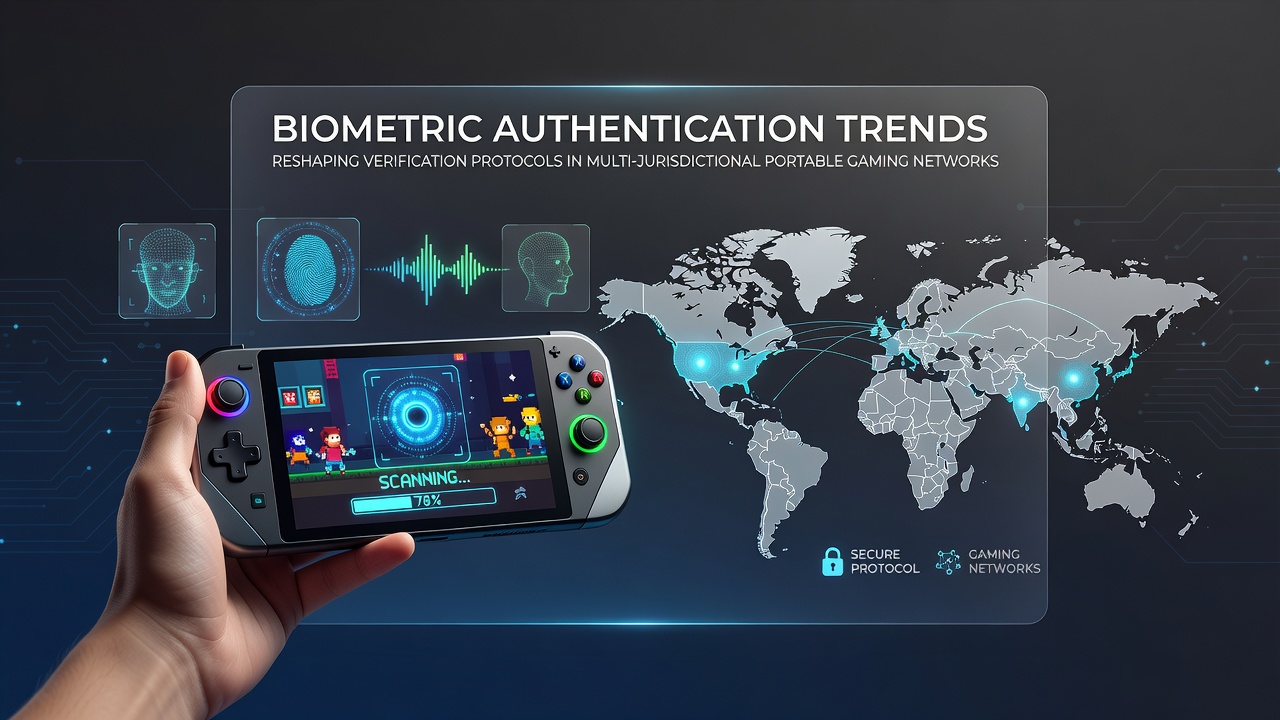
Biometric Authentication Trends Reshaping Verification Protocols in Multi-Jurisdictional Portable Gaming Networks
Portable gaming networks now span multiple jurisdictions where operators must reconcile differing regulatory requirements while maintaining seamless access for users on mobile devices, and biometric authentication has emerged as a central mechanism for meeting those demands without relying solely on passwords or one-time codes.
Shifting from Traditional Methods to Biometric Systems
Traditional verification often involved manual document uploads combined with knowledge-based questions yet these approaches created friction during cross-border play because data formats and acceptance criteria varied sharply between regions. Observers note that by August 2026 several networks had integrated facial recognition and fingerprint scanning directly into app onboarding flows, allowing a single enrollment to satisfy verification checks in multiple markets simultaneously while still permitting local regulators to apply their own oversight rules.
Researchers at academic institutions tracking digital identity have documented how liveness detection layers prevent static image spoofing, and data from industry reports indicate that adoption rates for these layered biometric checks rose steadily in portable gaming environments throughout 2025 and into mid-2026.
Core Technologies Driving Current Protocols
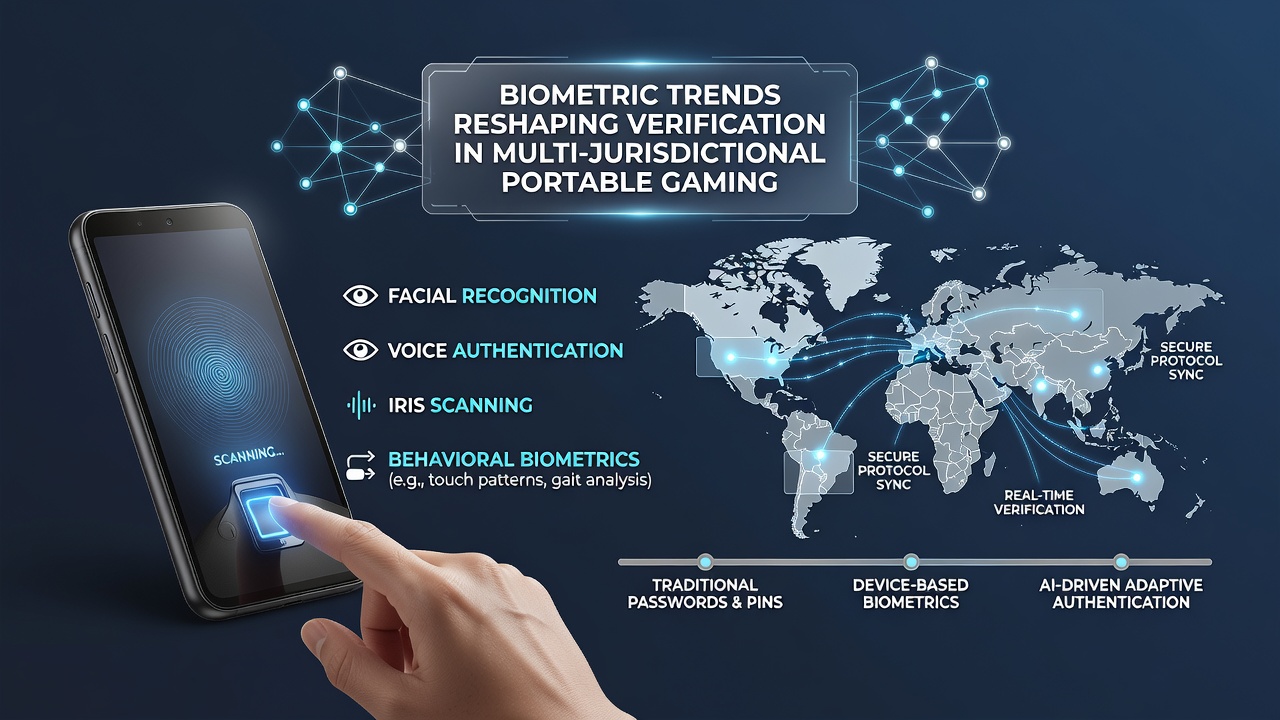
Facial recognition paired with infrared depth mapping forms one primary method while fingerprint sensors embedded in device hardware provide a secondary check that functions even when lighting conditions vary. Voice biometrics appear less frequently in gaming contexts because background noise during play sessions can interfere with accuracy, although some operators test hybrid systems that combine voice with behavioral analytics such as touch pressure patterns and swipe velocity.
Those who have studied implementation patterns across platforms find that iris scanning remains rare in consumer mobile settings due to hardware limitations, whereas palm vein recognition is gaining attention in controlled environments like dedicated gaming lounges connected to portable networks.
Regulatory Navigation Across Borders
Multi-jurisdictional networks must align with frameworks from bodies such as the Nevada Gaming Control Board alongside emerging standards from Canadian provincial authorities and Australian state regulators, each of which sets distinct thresholds for data retention and consent granularity. Because biometric templates cannot be reset like passwords once compromised, these rules often require on-device storage rather than centralized databases, and developers have responded by adopting encryption protocols that keep raw images off servers entirely.
What's interesting is how some networks now segment biometric data processing so that verification occurs locally on the device while only anonymized confirmation tokens travel to regional compliance hubs, satisfying divergent privacy expectations without forcing users to repeat enrollment steps when crossing jurisdictional lines.
Implementation Patterns Observed in 2026
By August 2026 several large portable gaming operators reported that biometric verification reduced account takeover incidents by measurable margins compared with earlier password-only systems, according to aggregated figures shared through industry associations. One study revealed that players who completed biometric enrollment once could access games across participating jurisdictions with fewer interruptions, although initial setup times increased slightly due to the need for multiple capture angles and liveness prompts.
Experts tracking these deployments emphasize that fallback mechanisms remain essential because device compatibility varies, and networks continue to maintain traditional document verification pathways for users whose hardware lacks adequate sensors or who encounter temporary technical failures.
Security and Data Handling Considerations
Encryption standards for biometric templates have tightened in response to regulatory scrutiny, with many protocols now requiring secure enclaves within mobile processors to isolate matching operations from the broader operating system. Industry organizations have published guidelines recommending periodic template refreshes and user-controlled deletion options, while academic papers continue to examine long-term accuracy rates as algorithms encounter diverse populations across global user bases.
Those who've examined breach response procedures note that because biometric data cannot be changed, networks prioritize rapid containment and user notification over any attempt to reset compromised identifiers.
Conclusion
Biometric authentication continues to influence verification protocols in multi-jurisdictional portable gaming networks by offering faster, device-native checks that accommodate varying regulatory landscapes while reducing reliance on manual processes. As hardware capabilities expand and standards evolve, the integration of these technologies supports both compliance needs and operational continuity across borders, with ongoing developments tracked through regulatory updates and technical research into 2026 and beyond.