How Geolocation Algorithms Shape Regional Game Availability in Mobile Platforms
Cameron Friedrich · Aug 22, 2026

How Geolocation Algorithms Shape Regional Game Availability in Mobile Platforms
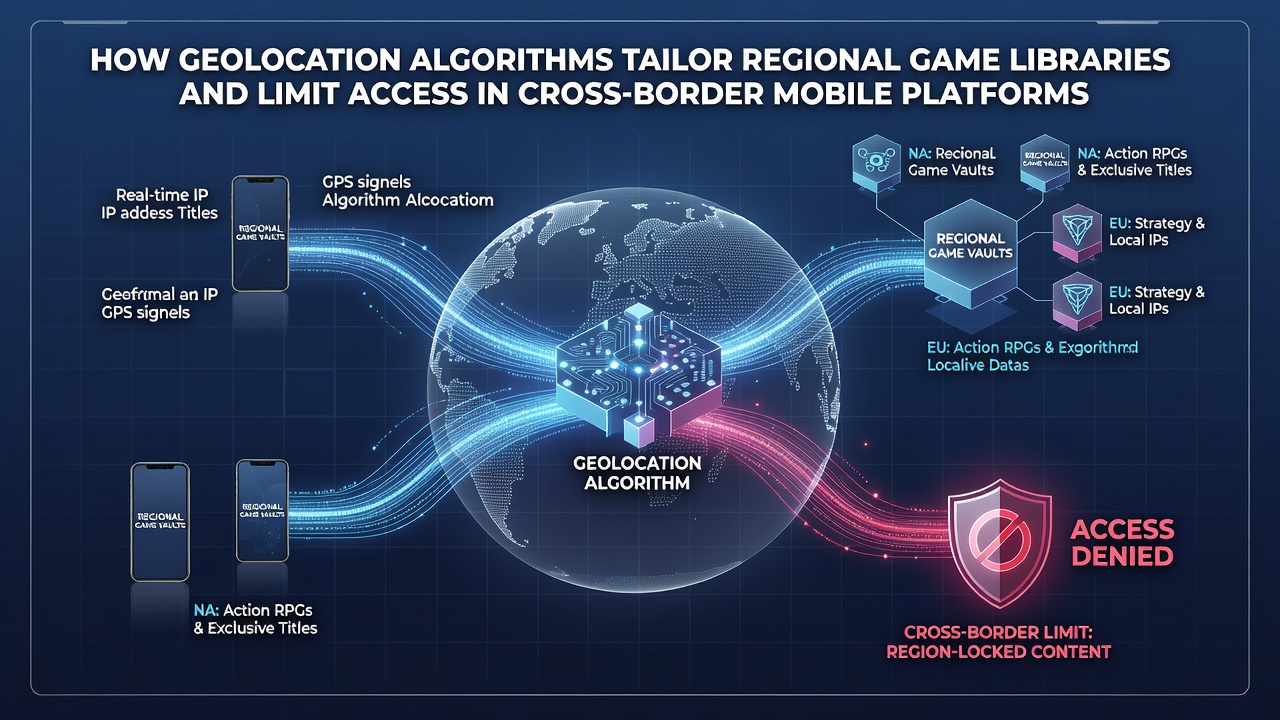
Geolocation algorithms determine which games appear in a user's library on cross-border mobile platforms by combining IP address mapping, GPS coordinates, and device-level signals to enforce licensing rules that vary by jurisdiction. These systems operate continuously in the background, checking location data at login, during gameplay sessions, and at random intervals to maintain compliance. Mobile operators integrate multiple data points because single-method verification often fails when users rely on VPNs or travel across borders.
Core Mechanisms Behind Location Detection
Platforms collect IP addresses through network providers and cross-reference them against commercial databases that assign locations down to city level, while GPS modules supply latitude and longitude that must match within defined tolerances. Device identifiers such as SIM card country codes and time-zone settings add secondary layers that flag inconsistencies. When any signal suggests the user sits outside permitted zones, the algorithm removes titles whose licenses restrict distribution to specific territories. Developers update these rule sets regularly to reflect new regulations that take effect in August 2026 across several Asian and European markets.
Regional Library Variations in Practice
Users in one country may see progressive jackpot slots that remain unavailable just across a border because local laws cap prize pools or require separate certification. Skill-based games appear in North American libraries yet vanish from certain South American accounts due to prohibitions on elements resembling gambling mechanics. Observers note that the same platform account can display entirely different catalogs when the user crosses from one province to another within the same nation. These differences arise directly from licensing agreements that tie content rights to physical presence rather than user preference.
Technical Challenges with VPNs and Travel
Algorithms incorporate behavioral checks that detect VPN traffic by analyzing latency patterns and known proxy server ranges, then either block access or force the user to disable the service before loading games. Frequent travelers encounter session interruptions when the platform registers a sudden location shift that exceeds expected movement speeds. Some services maintain short grace periods for users who begin play in an approved area yet cross boundaries mid-session, while others terminate the connection immediately. Data from industry reports indicate that such interruptions occur most often near international borders where regulatory zones change abruptly.
Regulatory Drivers Across Jurisdictions
Government agencies in multiple regions require operators to maintain accurate location records for audit purposes, and failure to restrict content appropriately can result in license revocation. iGaming Ontario publishes technical standards that mandate real-time verification for all mobile sessions. Similar rules appear in Australian legislation administered by the Australian Communications and Media Authority, which ties game availability to state-level approvals. European operators follow directives that allow national variations even within the single market framework. These layered requirements force platforms to maintain separate content databases rather than a single global catalog.
Impact on Cross-Border User Experiences
Players who move between countries often discover that progress on certain titles does not transfer because the games themselves exist only in one regional library. Account balances remain accessible, yet the specific game servers may reject connections from new locations. Some platforms offer workarounds such as region-switching features that require additional identity verification, although these options remain limited to users with documented residency in multiple zones. Research from academic studies on digital distribution shows that such fragmentation increases support queries during peak travel seasons.
Future Developments in Algorithm Accuracy
Engineers continue refining multi-signal fusion techniques that combine satellite data with cellular tower triangulation to reduce false positives when users operate near borders. Machine learning models trained on historical access logs now predict likely location changes and preload compliant content ahead of time. Partnerships between platform operators and mapping service providers supply fresher geofence boundaries that update whenever new laws take effect. These advancements aim to minimize disruptions while satisfying the distinct legal obligations that apply in each operating territory.
Conclusion
Geolocation systems on cross-border mobile platforms function as gatekeepers that translate complex regulatory landscapes into personalized game selections. Their ongoing evolution reflects both technological improvements in location precision and the persistent need for operators to respect territorial licensing boundaries. As more jurisdictions introduce or revise rules in the coming years, these algorithms will continue to determine which titles users can access based solely on where they connect from.