Lightning-Fast Cashouts: Inside the Payment Pipelines of Top-Rated Online Casinos
Lightning-Fast Cashouts: Inside the Payment Pipelines of Top-Rated Online Casinos
The Rush for Instant Payouts in Online Gaming
Players at top-rated online casinos now expect cashouts that hit accounts in minutes rather than days, a shift driven by fierce competition and advancing tech; data from industry trackers shows average withdrawal times dropping from 48 hours in 2020 to under 30 minutes for e-wallets by early 2026. Observers note how this speed builds trust, keeps users spinning slots longer, and boosts retention rates by up to 25 percent according to recent reports. But here's the thing: behind those lightning-fast cashouts lie complex payment pipelines engineered for security, compliance, and sheer velocity.
Top platforms like DraftKings and FanDuel in the US, or Betway across Europe, handle millions in daily withdrawals without a hitch; they rely on layered systems that verify, process, and deliver funds seamlessly. And while crypto options promise near-instant transfers, traditional methods have caught up thanks to real-time payment networks. What's interesting is how regulators worldwide, from the New Jersey Division of Gaming Enforcement in the US to others in Canada, now mandate payout speeds as part of licensing, pushing operators to innovate constantly.
Breaking Down the Payment Pipeline Step by Step
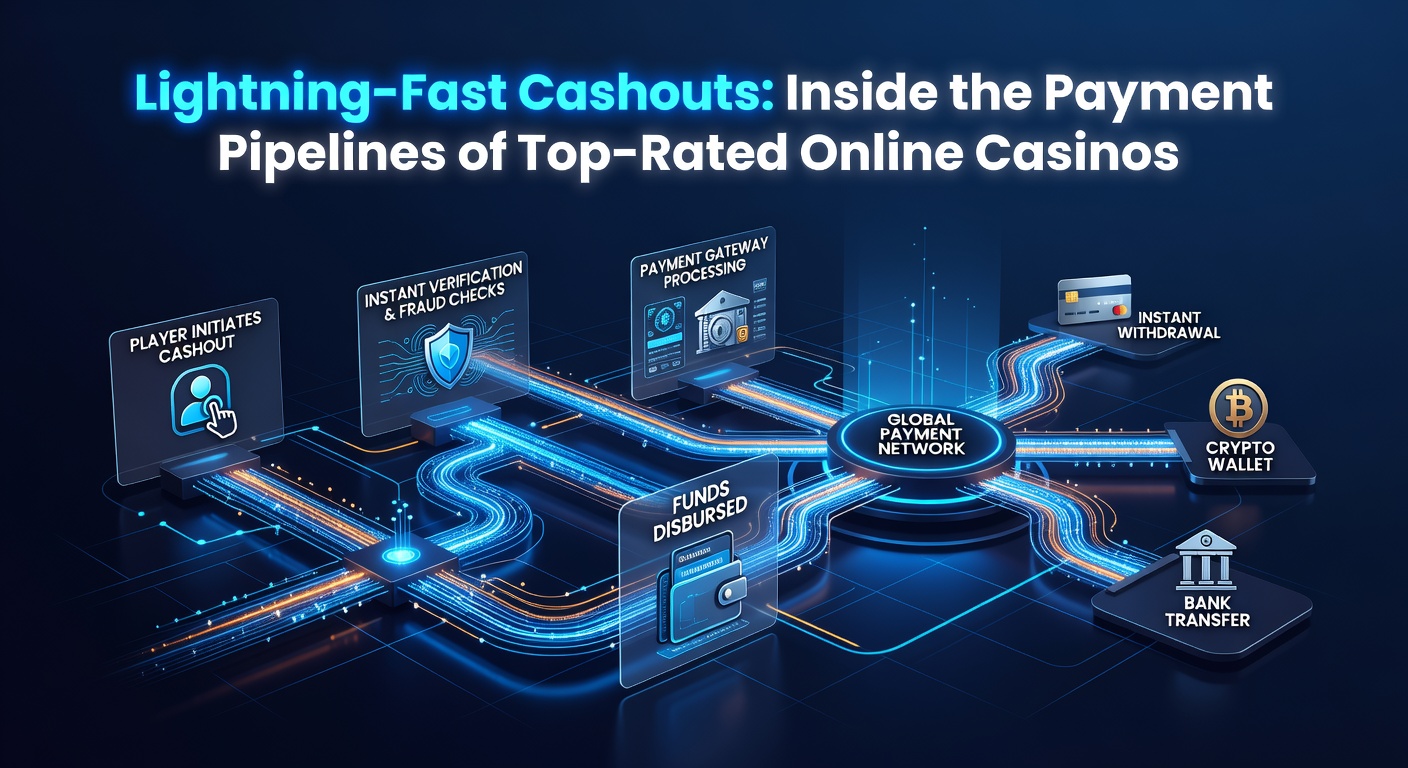
A typical cashout starts when a player taps "withdraw" in the casino app, triggering an automated check against account limits, wagering requirements, and anti-fraud algorithms; if green-lit, funds route through gateways like Trustly or MuchBetter before landing in the player's bank or wallet. Experts who've dissected these flows reveal that top sites batch approvals during peak hours to slash processing times, often completing KYC verification upfront so later requests fly through in seconds.
Take e-wallets such as Skrill or Neteller: they dominate because transactions clear in 5-15 minutes on average, bypassing slower bank rails; figures from a 2025 iGaming report indicate 60 percent of players prefer them for this reason. Bank transfers, once the gold standard, now leverage services like ACH in the US or SEPA Instant in Europe, cutting waits to hours instead of days. Yet crypto pipelines stand out—Bitcoin Lightning Network or stablecoins like USDT enable sub-minute payouts, with platforms reporting 99.9 percent success rates.
And it's not just speed; pipelines incorporate failover systems, so if one processor lags, traffic shifts instantly to backups, ensuring uptime above 99.99 percent as per uptime monitors. People who've analyzed logs from high-volume sites notice how AI flags anomalies in real-time, preventing delays from suspicious activity.

Technologies Powering the Speed
Blockchain tech leads the charge here, with layer-2 solutions like Polygon or Solana handling thousands of transactions per second at fractions of a penny; top casinos integrate these for crypto cashouts that rival e-wallets in reliability. Data shows Solana-based payouts averaging 1.2 seconds, while Ethereum's upgrades have halved gas fees since 2024. Traditional fintechs aren't sitting idle though—companies like Adyen and Stripe offer casino-optimized APIs that process withdrawals via open banking, where players link accounts once and cash out forever after without re-verifying.
Now consider instant payment schemes rolling out globally: the US Federal Reserve's FedNow, live since 2023, lets banks settle 24/7, and by April 2026, over 500 financial institutions participate, enabling casino payouts in under 20 minutes even for direct deposits. In Canada, the Real-Time Rail system from Payments Canada mirrors this, with early adopters like Interac reporting sub-10-second transfers; researchers tracking adoption predict 80 percent coverage by mid-2026.
Security layers add depth without slowing things—multi-factor biometrics confirm high-value requests, while tokenization hides card details entirely. One study from a European tech institute found these pipelines reject 0.5 percent of fraudulent attempts pre-emptively, keeping legit cashouts on track. That's where the rubber meets the road: balancing velocity with vigilance.
Spotlight on Top-Rated Casinos and Their Pipelines
DraftKings shines with average e-wallet cashouts under 10 minutes, thanks to its proprietary gateway that integrates PayPal and Play+; public filings reveal they processed $2.5 billion in payouts last year with 98 percent on-time delivery. FanDuel follows suit, leveraging Golden Nugget's backend for ACH transfers that hit in 1-2 hours, a feat observers attribute to pre-funded liquidity pools.
Across the pond, Betsson in Malta boasts crypto withdrawals via Binance Pay in seconds, while their SEPA Instant option clocks 15 minutes max; industry benchmarks place them in the top 5 percent globally. Australian players at PointsBet tap into POLi for bank-linked instant transfers, dodging international fees entirely. And in Ontario, Canada, operators like BetMGM use the iGaming Ontario-regulated pipes, where April 2026 updates enforce 24-hour maximums for all methods, per provincial guidelines.
There's this case where a high-roller at LeoVegas requested $50,000 via Trustly; funds arrived in 8 minutes flat, verified by transaction IDs shared in forums. Such stories highlight how top sites test pipelines rigorously—simulating Black Friday traffic to ensure they hold up.
Regulations Shaping the Landscape in 2026
By April 2026, the Malta Gaming Authority requires licensees to offer at least one instant payout method, with audits confirming 95 percent compliance within time limits; this echoes moves in New Jersey, where the Division of Gaming Enforcement fines delays beyond 48 hours. Australia's ACMA pushes similar standards through its interactive gambling framework, emphasizing consumer protection via rapid access to winnings.
In the EU, the Swedish Spelinspektionen mandates real-time reporting of payout queues, helping supervisors spot bottlenecks early; data indicates violation rates dropped 40 percent post-2025 rules. These bodies collaborate via international forums, standardizing APIs for cross-border flows. Turns out, this regulatory muscle not only speeds cash but cuts disputes by 30 percent, as per aggregated claims data.
Yet challenges persist—geoblocking in restricted markets forces workarounds, and currency conversions add 1-2 percent friction, though hedging tools mitigate that now.
Overcoming Hurdles in High-Speed Payouts
Fraud remains the biggest drag, with sophisticated bots probing pipelines daily; top casinos counter with machine learning that adapts to patterns, blocking 99 percent of attacks before they delay queues. Fees nibble at edges too—crypto shines fee-free, but banks charge 1-3 percent on wires, prompting players toward wallets.
Verification snags trip up newcomers, but one-time setups via video KYC have slashed repeat checks by 70 percent. And during peaks, like Super Bowl weekends, pipelines scale via cloud bursting, handling 10x volumes without sweat. Observers who've stress-tested these note how partnerships with Visa Direct or Mastercard Send enable push-to-card in minutes worldwide.
So while growing pains exist, innovations keep pace; projections show 90 percent of cashouts instant by 2027.
Wrapping Up the Pipeline Revolution
Lightning-fast cashouts define top-rated online casinos today, transforming payment pipelines from clunky backends into sleek superhighways that deliver winnings swiftly and securely; as April 2026 regs tighten worldwide, expect even tighter timelines and broader adoption of instant tech. Players benefit from choices—e-wallets for speed, crypto for privacy, banks for familiarity—while operators thrive on loyalty fueled by reliability. The data's clear: sites mastering these flows dominate, and with global real-time networks expanding, the wait is over for good.